How Mortgage Interest Works (And Why It Matters More Than You Think)
When you buy a home, the price tag is only part of the story. The interest you pay on your mortgage will be one of the biggest expenses of your life, but most people do not fully understand how it works. Knowing the math behind your loan can save you tens of thousands of dollars and help you build wealth much faster.
When you buy a home, the price tag is only part of the story. The interest you pay on your mortgage will be one of the biggest expenses of your life, but most people do not fully understand how it works. Knowing the math behind your loan can save you tens of thousands of dollars and help you build wealth much faster.
Here's How It Works
When you take out a mortgage, you agree to pay back the amount you borrowed plus a fee for borrowing that money. That fee is your interest. Your lender calculates this interest based on the remaining balance of your loan. Because your balance is highest at the very beginning, the amount of interest you pay is also at its highest.
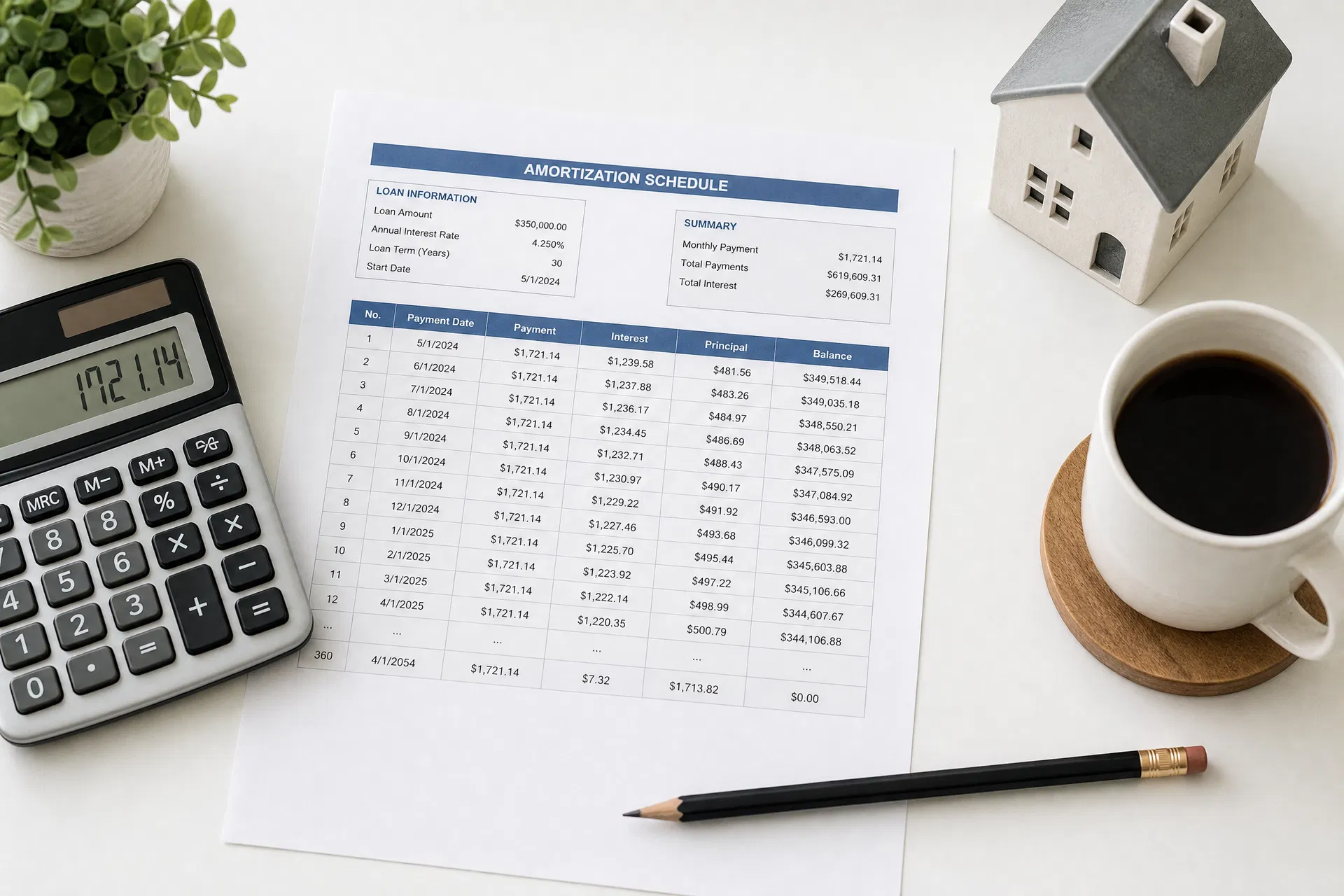
This brings us to a concept called an amortization schedule. This is simply a timetable that shows every monthly payment you will make over the life of your loan. If you look at the first few years of a standard 30-year mortgage, you will notice something surprising. Most of your monthly payment goes toward paying interest, and only a tiny fraction goes toward paying down the actual loan balance.
This is what we call front-loaded interest. Lenders structure loans this way so they collect their profit early on. As the years go by and your loan balance slowly drops, the math flips. More of your payment starts going toward the principal balance, and less goes toward interest. By the time you reach the final years of your loan, almost your entire payment is tackling the principal.
Because interest is calculated on your remaining balance, making extra payments can have a massive impact. Even a small extra payment each month goes straight to the principal. This lowers your balance faster, which means you pay less interest the following month. Over time, this snowball effect can shave years off your mortgage and save you a fortune.
You should also know about the mortgage interest deduction. The IRS allows many homeowners to deduct the interest they pay on their mortgage from their taxable income. This can provide a nice tax benefit at the end of the year, though the rules depend on your specific financial situation. It is just one more reason why understanding your interest payments is so important.
How This Applies Locally
Here in the Antelope Valley and Santa Clarita, home prices have grown steadily over the years. Whether you are buying your first home in Lancaster, upgrading to a larger property in Santa Clarita, or looking for a quiet spot in Acton, the size of your loan means interest will play a huge role in your monthly budget.
Many buyers in Palmdale and surrounding areas focus entirely on the monthly payment when shopping for a home. While the monthly payment is absolutely critical for your daily budget, understanding the total interest cost helps you make smarter long-term decisions. If you plan to stay in your home for a long time, finding ways to reduce that interest burden can free up cash for other investments, home improvements, or retirement.
Quick Example
Let us say you buy a home and take out a $400,000 mortgage on a 30-year term with a 6.5 percent interest rate. Your standard monthly payment for principal and interest would be about $2,528. Over the full 30 years, you would pay over $510,000 in interest alone. That means you pay more in interest than the original loan amount.
Now, imagine you decide to pay an extra $200 every month. That extra money goes straight to the principal. By doing this, you would pay off your loan about six years early. You would also save over $120,000 in total interest. That is money staying in your pocket instead of going to the bank.
Your Next Step
Pull up your current mortgage statement or ask your lender for an amortization schedule. Look at exactly how much of your last payment went toward the principal and how much went toward interest. Once you see the numbers, consider setting up a small automatic extra payment each month to start chipping away at that balance faster.
Have Questions?
Real estate math can feel overwhelming, but you do not have to figure it out alone. If you want to talk about how interest rates impact your buying power or if you need a recommendation for a great local lender, I am here to help. Visit www.samurban.homes or reach out to me directly. We can sit down and look at the numbers together.
Disclaimer
This is general education only. Talk with your lender, CPA, attorney, or financial advisor before making a decision.
References
https://www.investopedia.com/terms/i/interestrate.asp https://www.investopedia.com/terms/home-mortgage-interest.asp https://www.investopedia.com/articles/mortgages-real-estate/11/calculate-the-mortgage-interest-math.asp
What This Means Locally
Here in the Antelope Valley and Santa Clarita, home prices have grown steadily over the years. Whether you are buying your first home in Lancaster, upgrading to a larger property in Santa Clarita, or looking for a quiet spot in Acton, the size of your loan means interest will play a huge role in your monthly budget.
Many buyers in Palmdale and surrounding areas focus entirely on the monthly payment when shopping for a home. While the monthly payment is absolutely critical for your daily budget, understanding the total interest cost helps you make smarter long-term decisions. If you plan to stay in your home for a long time, finding ways to reduce that interest burden can free up cash for other investments, home improvements, or retirement.
Key Takeaway
Pull up your current mortgage statement or ask your lender for an amortization schedule. Look at exactly how much of your last payment went toward the principal and how much went toward interest. Once you see the numbers, consider setting up a small automatic extra payment each month to start chipping away at that balance faster.
References: https://www.investopedia.com/terms/i/interestrate.asp, https://www.investopedia.com/terms/home-mortgage-interest.asp, https://www.investopedia.com/articles/mortgages-real-estate/11/calculate-the-mortgage-interest-math.asp